Is Marketing Damaging the UK Heating Sector?
Industry Commentary

Nathan G
January 09, 2026
Helping YOU find good heating engineers. We share case studies from engineers in the Guild of Master Heat Engineers to help people find top installers, help gas and oil engineers increase their knowledge around heat pumps, and provide a solution for third-sector professionals to understand the industry better.
Installio powers the The BetaTeach newsletter.
BetaTeach exists as an independent voice in the UK heating sector. That independence matters at a time when ownership, platforms and influence are becoming increasingly concentrated. Because BetaTeach is not owned by a manufacturer, events group or platform operator, it can explore questions others often avoid. Many of our readers influence policy as well as practice, and this article is written with both audiences firmly in mind.
Is Marketing Damaging the UK Heating Sector?
The Replacement Market, Loyalty Schemes, and the Energy Transition.
The UK heating sector stands at a pivotal moment. While the industry touts greener, more sustainable solutions, a deeper look reveals a troubling trend. Leading manufacturers in the sector have adopted tactics that prioritise volume over sustainability, driving inefficiencies that result in long-term environmental harm.
A key culprit? Loyalty schemes. These reward programmes, promoted by the "Big Four" - Ideal Heating, Baxi, Worcester Bosch, and Vaillant - push installers to register more units each year, fuelling a high-volume boiler replacement cycle rather than focusing on repair, maintenance, and system longevity.
The Evolution of the UK Boiler Industry: From Gasification to Replacement Culture
The rise of the UK’s boiler market can be traced back to the gasification of the 1960s and 70s, following the discovery of North Sea methane. By 1977, nearly half of British homes had switched from coal to natural gas, making the UK the world’s largest market for gas boilers. However, a significant shift occurred in 2016, when China and South Korea overtook the UK due to China’s "coal-to-gas" policy. The UK is still the largest gas boiler market in Europe.
Today, the UK has transformed into an almost entirely replacement-driven market, with over 26 million boilers already installed. This has led to a landscape where sales are driven largely by replacing old units, rather than installing new grid connections. With an already significant installed base, the market is dominated by the ongoing need for replacements.
Gas Safe Register: Surge in Installers and the Shift to Volume
In 2009, the Gas Safe Register took over from CORGI as the official governing body for gas safety in the UK, and with it came a massive surge in registered engineers. Today, more than 120,000 engineers are on the register, increasing competition in the market and reinforcing the high-volume installation culture.
This growing pool of engineers, combined with the industry’s loyalty schemes, has led to a focus on boiler installations rather than repairs or optimising the performance of existing systems. Thousands of installers now replace boilers daily, contributing to the rapid turnover and growing reliance on replacement over repair.
Glow-worm: A Pioneering Loyalty Scheme in 2009
Coinciding with the rise of the Gas Safe Register, Glow-worm introduced one of the first loyalty schemes in 2009 - the ‘Glow-worm Club’. This programme rewarded installers for registering boilers, ushering in a new high-volume approach to the market. This pivotal moment set the stage for the other major manufacturers to adopt similar loyalty schemes, deepening the replacement-driven culture.
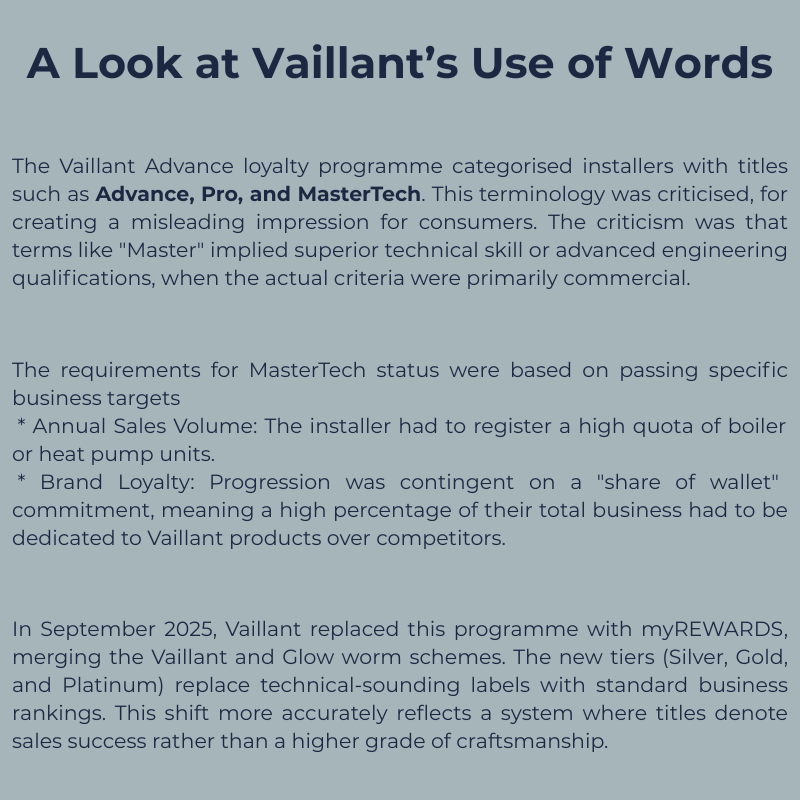
The Big Four - Ideal Heating, Baxi, Worcester Bosch, and Vaillant - soon followed suit, each offering incentives like cash bonuses, points, and exclusive rewards for increased registration numbers. This shift towards volume-driven loyalty has become entrenched in the market, where the focus has shifted from long-term system health to pushing for boiler replacements.
The Term "Installer" - The Psychological Impact of Changing Terminology
One of the significant shifts in the industry has been the rise of the term “installer”. Traditionally, professionals in the field were known as plumbers, heating engineers, technicians, or fitters. These terms suggested a more holistic approach to the role - focused not just on installations but also on maintenance, repair, and the long-term health of heating systems.
However, over the last two decades, the rise of the term “installer” has helped shift the profession's focus towards installing new boilers. The term was popularised by Corgi’s “Installer” magazine in the early 2000s, and the term has since dominated the industry. This subtle shift in terminology reflects the broader cultural shift from repair and longevity to new installations.
The use of "installer" has contributed to the psychological reinforcement of volume-based replacement culture. Professionals who were once referred to as engineers or technicians are now incentivised to install new boilers, even when repairs or optimisations would be more sustainable.
From Long-Lasting Boilers to High-Volume Replacements
Historically, boilers were designed to last for decades. Companies like Trianco built cast-iron boilers that were well-regarded for their durability and repairability. These boilers often lasted for 30 years or more, requiring only minor repairs.
However, over time, the focus shifted from building durable, repairable boilers to creating high-efficiency, volume-driven models. This shift was accelerated by the rise of companies like Worcester Bosch, Vaillant, Ideal, and Baxi in the 1980s and 1990s. The mandate of condensing technology in 2005 marked the beginning of a focus on efficiency rather than longevity.
This transition towards high-volume replacements has been entrenched in the loyalty schemes of the Big Four, which reward installers for increasing registration numbers, rather than for ensuring the longevity or energy efficiency of the systems they install.
Loyalty Schemes: Rewarding Volume Over Sustainability
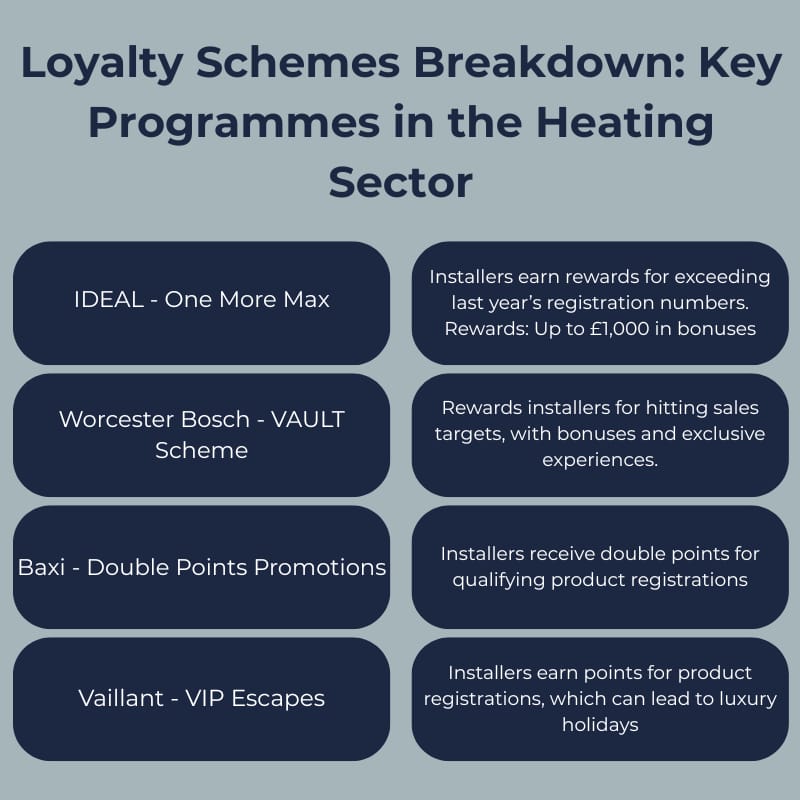
Ideal Heating’s "One More MAX" is a prime example of a loyalty scheme that rewards volume-driven behaviour. The scheme offers bonuses for surpassing registration targets, offering up to £1,000 for hitting higher numbers. These schemes incentivise the replacement of boilers, rather than encouraging installers to repair or optimise existing systems.
Baxi has followed suit, offering double points for installers who register certain products, which can then be redeemed for rewards like tools, tech, or experiences. This further entrenches the high-volume installation culture rather than prioritising long-term system health.
The Psychology of Loyalty Schemes: Nudging Installers Toward Replacements
Loyalty schemes in the heating sector use behavioural psychology to nudge installers toward recommending replacements over repairs. Key psychological principles include:
Nudging: These schemes subtly influence installers to focus on new installs by offering financial rewards and recognition for higher registration targets.
Anchoring: The reward system creates a reference point where installers aim to meet higher numbers each year. The higher the target, the greater the reward, encouraging them to prioritise replacements.
This behavioural influence is designed to push installers toward new boiler installations, even when repairs or system optimisations might be the more sustainable, energy-efficient option.
A Day in the Life of an Installer: The Decision to Replace
Imagine an installer visits a home and finds that the boiler is just 7 years old. It’s not working but could be repaired. The installer realises that recommending a new boiler would earn them more points under their loyalty scheme. The customer is unlikely to challenge the suggestion, and the installer opts to replace the boiler. This scenario demonstrates how loyalty schemes subtly incentivise volume-based decision-making, even when repair or optimisation would be a better option.
British Gas and Boxt: The Installers of Today
British Gas and Boxt are key players in reinforcing the replacement culture. While Boxt markets heat pumps as a greener solution, it continues to rely heavily on gas boilers for installs, which often use on/off thermostatic control, leading to frequent cycling and decreased efficiency. This creates a contradiction, as they promote energy-efficient solutions while still installing older, less efficient technology.
These companies further contribute to the focus on high-volume installs, where boiler replacement becomes the norm, rather than focusing on energy efficiency or system longevity.
The Competitive Loyalty Arms Race: How the Big Four Reinforce the Cycle
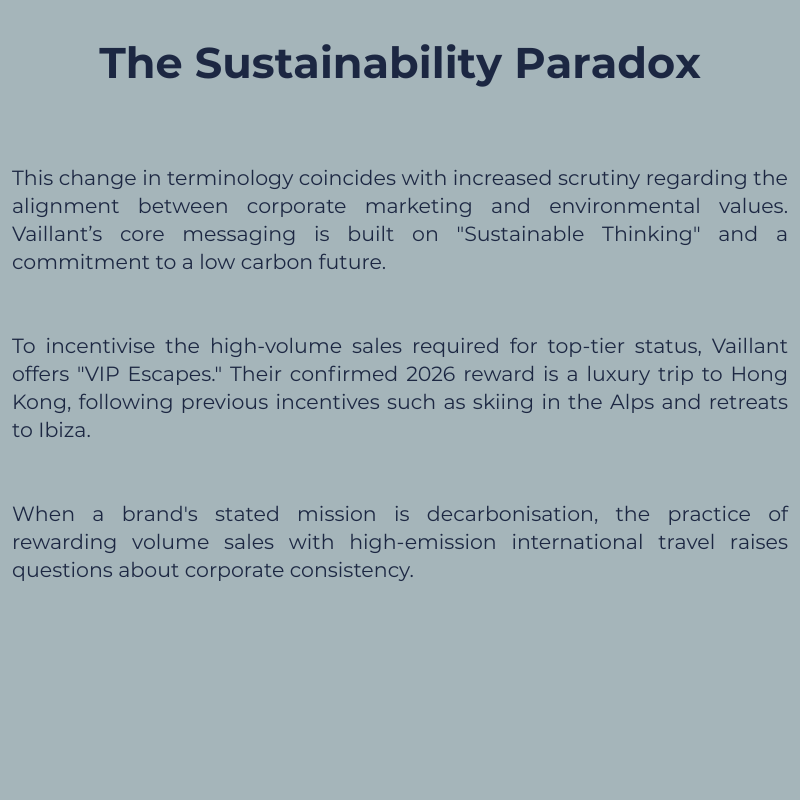
The loyalty schemes offered by the Big Four are not just about rewarding installers; they’re also a way to maintain market dominance. Each manufacturer competes with the others to provide better rewards, such as cashback offers or double loyalty points. While this may drive short-term sales, it ultimately reinforces the replacement cycle, contributing to unnecessary waste and higher carbon emissions.
Many installers continue to use basic on/off thermostatic control, which leads to frequent cycling of boilers. This reduces efficiency, increases wear and tear, and ultimately shortens the lifespan of systems.
Reimagining Loyalty: Rewarding Long-Term System Health
It’s time to shift the focus of loyalty schemes away from volume metrics to prioritising long-term system health. Instead of rewarding installers purely for new installations, loyalty schemes should incentivise the use of energy-efficient technologies like weather compensation and modulating controls, which would extend boiler life, reduce energy consumption, and align with Net Zero goals.
By rewarding installers who opt for systems that optimise long-term efficiency, manufacturers can help create a more sustainable heating sector - one that reduces emissions and supports consumers in making informed, lasting decisions about their heating systems.
A Call to Action: Join the Change at NESTA
Marketing professionals in the heating sector have a crucial role to play in this transition. They are the gatekeepers of consumer and installer behaviour and can help shift the focus from volume to sustainability. On 9th March, I will be hosting an exclusive event at NESTA in London designed specifically for marketing professionals in the heating sector. This event will discuss the role of marketing in the energy transition and how it can help drive more sustainable practices in the industry.
Conclusion: A Future Built on Sustainability
The UK heating sector faces a critical question: are loyalty schemes like "One More MAX" truly helping us achieve a sustainable future, or are they reinforcing a cycle of waste and inefficiency? To meet Net Zero targets, we must shift the focus from high-volume replacements to incentivising long-lasting, energy-efficient systems.
The time is now for the industry to lead by example - rewarding installers who contribute to energy efficiency and system longevity. By rethinking loyalty schemes, we can help foster a greener, more efficient heating sector.
The Guild of Master Heat Engineers is supported by our Patrons.

Learn more about our Patrons here.
Nathan
Subscribe to get more newsletters like this, if you haven’t already.