Heat Pump Installation in a Deep-Retrofit Cheshire Semi with Beautiful Cast-Iron Radiators
A master heat engineer case study
Helping YOU find good heating engineers. We share case studies from engineers in the Guild of Master Heat Engineers to help people find top installers, help gas and oil engineers increase their knowledge around heat pumps, and provide a solution for third-sector professionals to understand the industry better.
Installio powers the The BetaTeach newsletter.
Overview
This Victorian semi detached home in Heaton Moor, Stockport has been through a retrofit that transformed it from freezing and draughty to quiet, comfortable, and heated with a heat pump. Before work began, the house had a calculated heat loss estimate of 19.2 kW, which made low temperature heating very difficult. A deep retrofit reduced this to 5.2 kW, even though the usable floor area increased. The homeowners, who run Castrads, a Guild Patron supporting the BetaTeach Guild of Master Heat Engineers project, wanted the house to demonstrate something important: that you can pair beautiful, extremely well made cast iron radiators with a low temperature heat pump system and achieve exceptional comfort and efficiency.
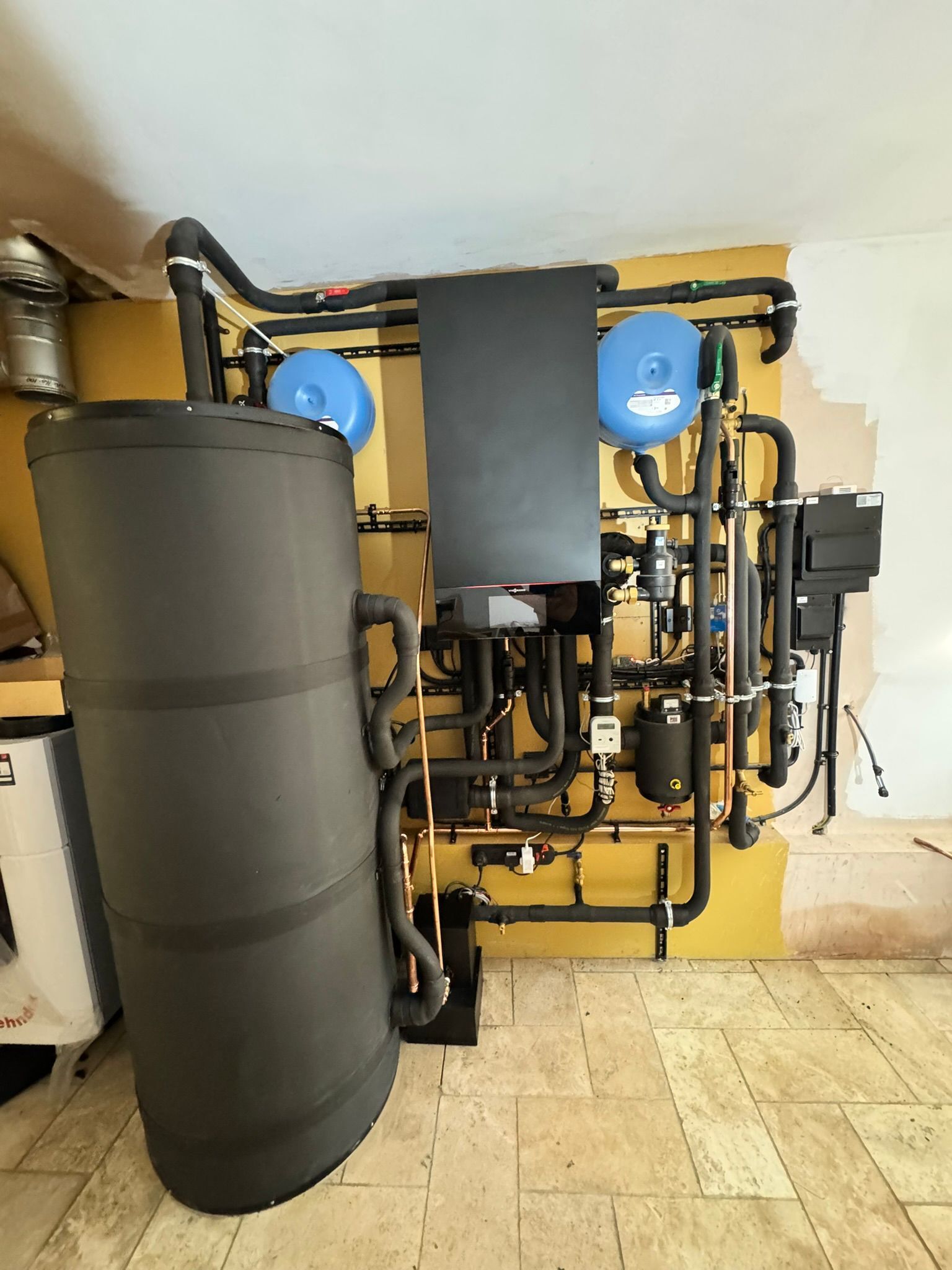
Master heat engineer Damon Blakemore of Blakemore Renewables designed and installed a 6 kW Viessmann Vitocal 150 A system matched to the improved building fabric and a truly extraordinary radiator collection.
The result is a calm, stable 20 to 21°C home with flow temperatures around 40°C, even during a cold snap, proving once again that heat pumps and heritage radiators can be a perfect match.
Master Heat Engineer
Damon Blakemore, from Blakemore Renewables Damon is the Installer Representative at the Heat Pump Association and one of the most sought after engineers in the United Kingdom for low temperature system design and commissioning. Damon supported the radiator installation design, advised on pipework routing, and then delivered the full heat pump system installation. |  |
Key Specifications
Property: Semi detached Victorian “Cheshire semi”, wide at the front and narrow at the back, built in 1897
Location: Heaton Moor, Stockport
Floor area: 298 m² after retrofit and basement integration
Heat pump: 6 kW Viessmann Vitocal 150 A/151A
Design flow temperature: 40°C
Water quality: VDI2035 with Thoroughflush maintenance kit
Ventilation: Whole house MVHR as part of the retrofit
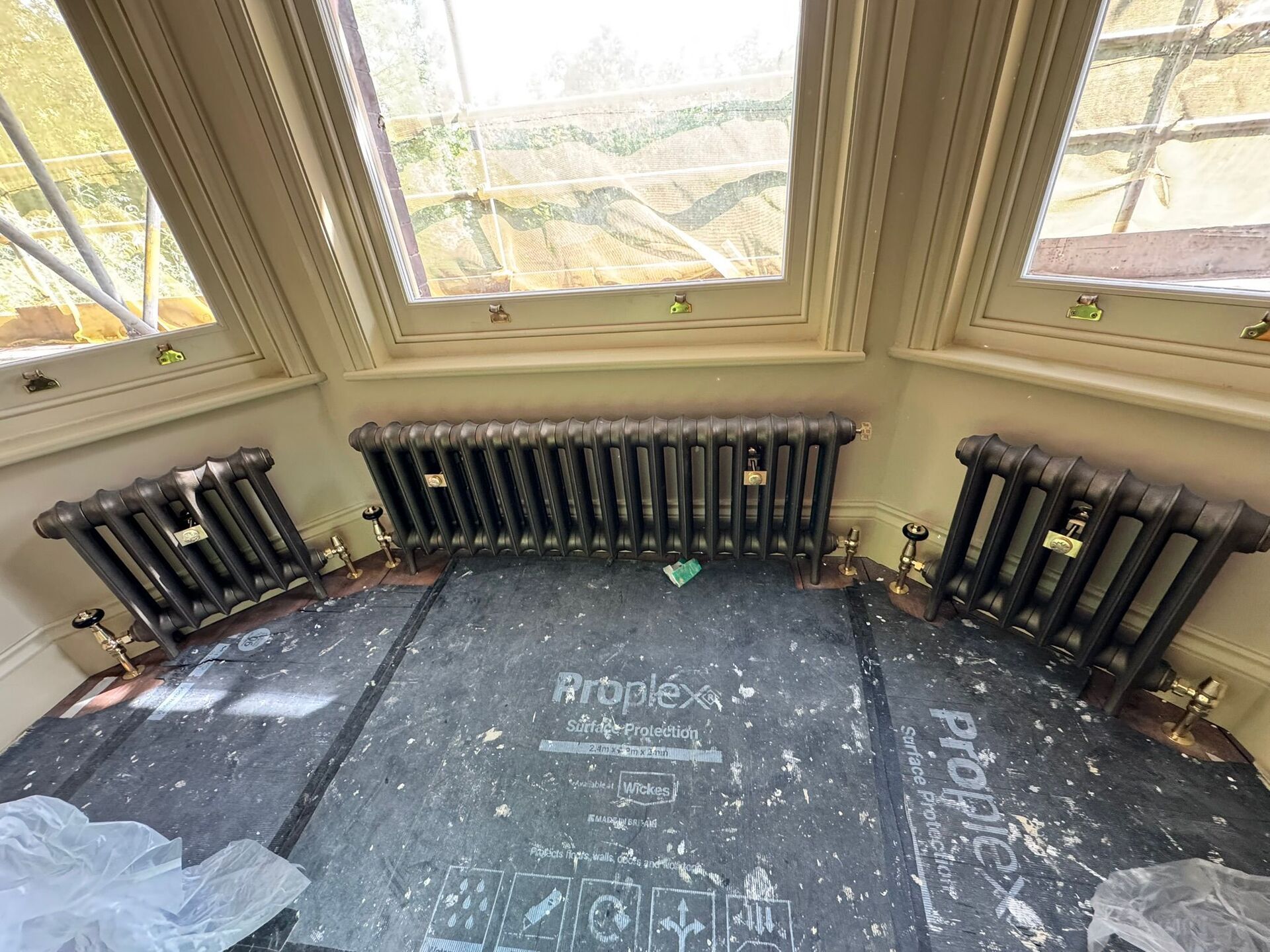
Emitter system: A museum worthy combination of heritage and modern cast iron radiators, including:
1890s American Radiator Company National
1890s American Radiator Company Rococo Window
1940s Ideal Standard Neo Classic salvaged from Scotland Yard
1950s Ideal Standard Hospital Easy Clean
Beeston Pall Mall five column, circa 1960s
Castrads Mercury radiators, new .
Castrads Emmeline radiators, new.
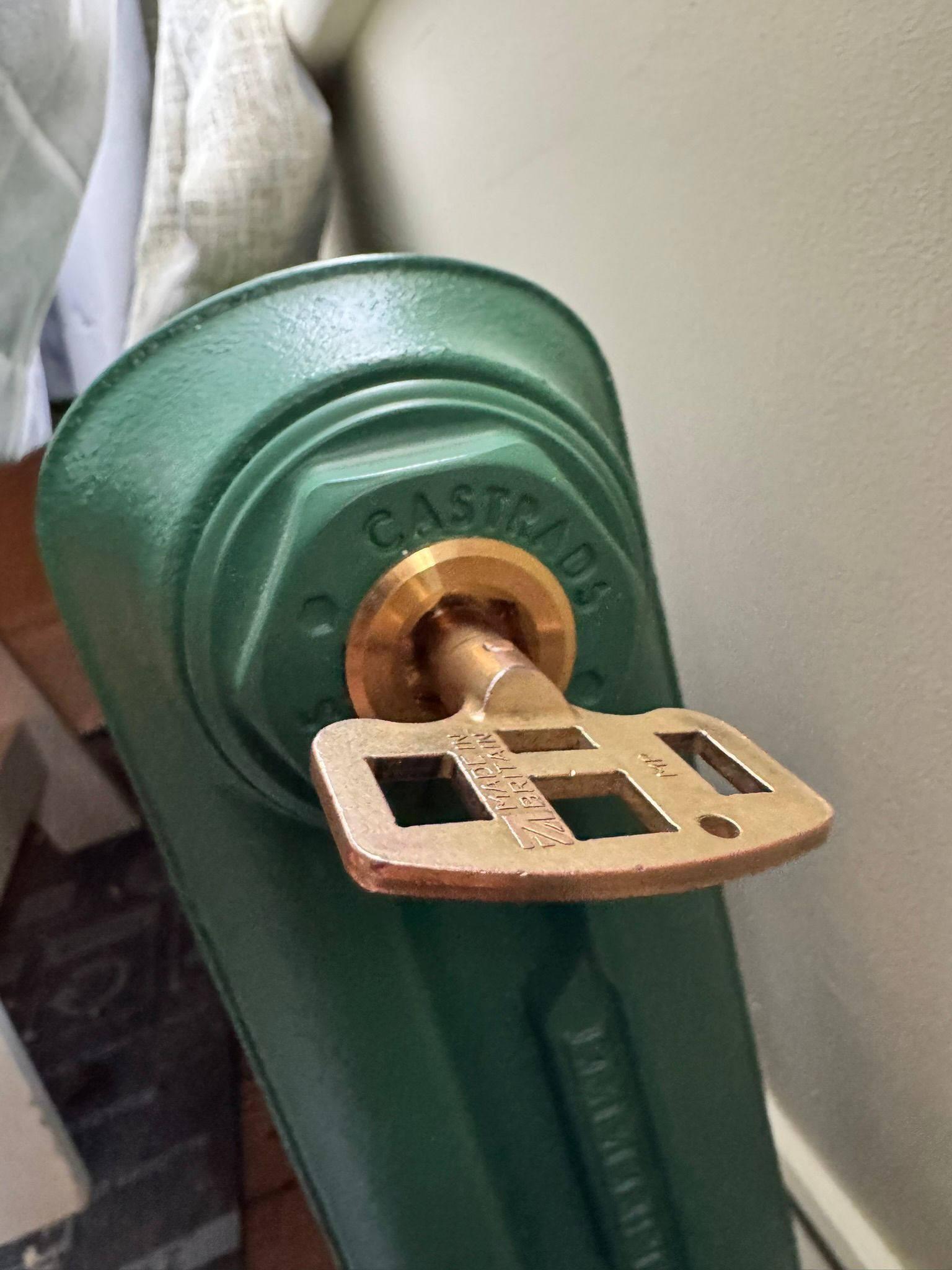
These last two, made today using the same construction methods as their historical counterparts, form the backbone of the upgraded emitter system and demonstrate the Guild Patron’s craft at its finest.

The Challenge:
Like many Victorian semis, this house began as a very cold and draughty property with significant heat loss. The initial calculated heat loss estimate was 19.2 kW at 103 W per square metre, which meant that a low temperature heating system would be difficult to install.
The homeowners did not want to compromise. They wanted the comfort and running costs of a modern heat pump while keeping the character and craftsmanship of their cast iron radiators. These radiators were not generic panels. They were historically significant antiques and newly manufactured Castrads pieces, each with its own output characteristics and sizing considerations. Castrads are, in Nathan’s opinion, the leading experts on cast iron radiators.
The house sits in a conservation area, which meant that external insulation was not an option. Every part of the solution needed to respect planning constraints while also supporting low temperature operation.
System Design
Design and Installation Innovations
Working with energy consultants and architect Cormac O’Droma of ODDD Architecture, the homeowners undertook a deep retrofit. This included:
Full Tripple Glazing
Internal wall insulation (IWI)
MVHR
Basement conversion added into the heated envelope
Ongoing airtightness improvements
This work reduced the calculated heat loss from 19.2 kW to 5.2 kW, despite the floor area increasing by 33 per cent.
The radiator system was modelled using H2x software, including all the Castrads emitters, to size them specifically for low temperature performance. Castrads radiators are now available in the following design software packages: h2x, Heat Engineer, and in Spruce.
Damon supported the plumber with pipe run guidance, ensuring low temperature distribution would work seamlessly across such a varied radiator set.
He then installed the 6 kW Viessmann Vitocal 150 A, designed for a maximum flow temperature of 40°C, and commissioned it to run stably through the newly insulated envelope. Performance and ResultsPerformance
Even with some finishing touches still pending, notably a vestibule door for improved airtightness, the house has already delivered excellent real world performance.
Performance
• At -2 Celsius outside, the home maintained 20 degrees Celsius indoors with ease
• Heat pump consumption that day: 42.9 kWh
• Thermal output: 148 kWh
• Daily COP: 3.45
• Monthly COP for November 2025: 4.5 from 566 kWh electricity producing 2.55 MWh of heat
This is only halfway through the first heating season, but it is already clear that the system is performing superbly.
The radiators, especially the Castrads Mercury and Emmeline units, run beautifully at low temperatures, proving that cast iron radiators and heat pumps are not only compatible but ideal partners when designed correctly.
Estimated Heat Loss (kW) at Various Outside Temperatures
Temp | kJ/Sec | Temp | kJ/Sec |
|---|---|---|---|
-3°C | 5.7 | 6°C | 3.5 |
-1°C | 5.2 | 10°C | 2.6 |
0°C | 5.0 | 13°C | 1.9 |
3°C | 4.2 | 16°C | 1.2 |
Thanks to the Patrons
The Guild of Master Heat Engineers is supported by our Patrons.

Learn more about our Patrons here.
Podcast
In this landmark episode of BetaTalk, the host sits down with John Ewbank to discuss his pioneering and invaluable research into the domestic application of Air-to-Air Heat Pumps (A2A HPs).
This conversation marks a potentially historical inflection point for the UK heating sector, as Ewbank’s practical, data-driven work pushes the boundaries of efficient home heating.
John is working with the highly respected think tank Nesta on an A2A report - coming soon! In the meantime, take a listen to the interview I did with John a few days ago.
Closing Thoughts
This project is a clear example of what happens when deep retrofit, careful heat loss modelling, and heritage grade radiators all support a modern, low temperature heating system, which in this case uses a heat pump. Damon Blakemore delivered a system that is restrained, elegant, and brilliantly efficient, and the house now shows that you never need to choose between beauty and performance.
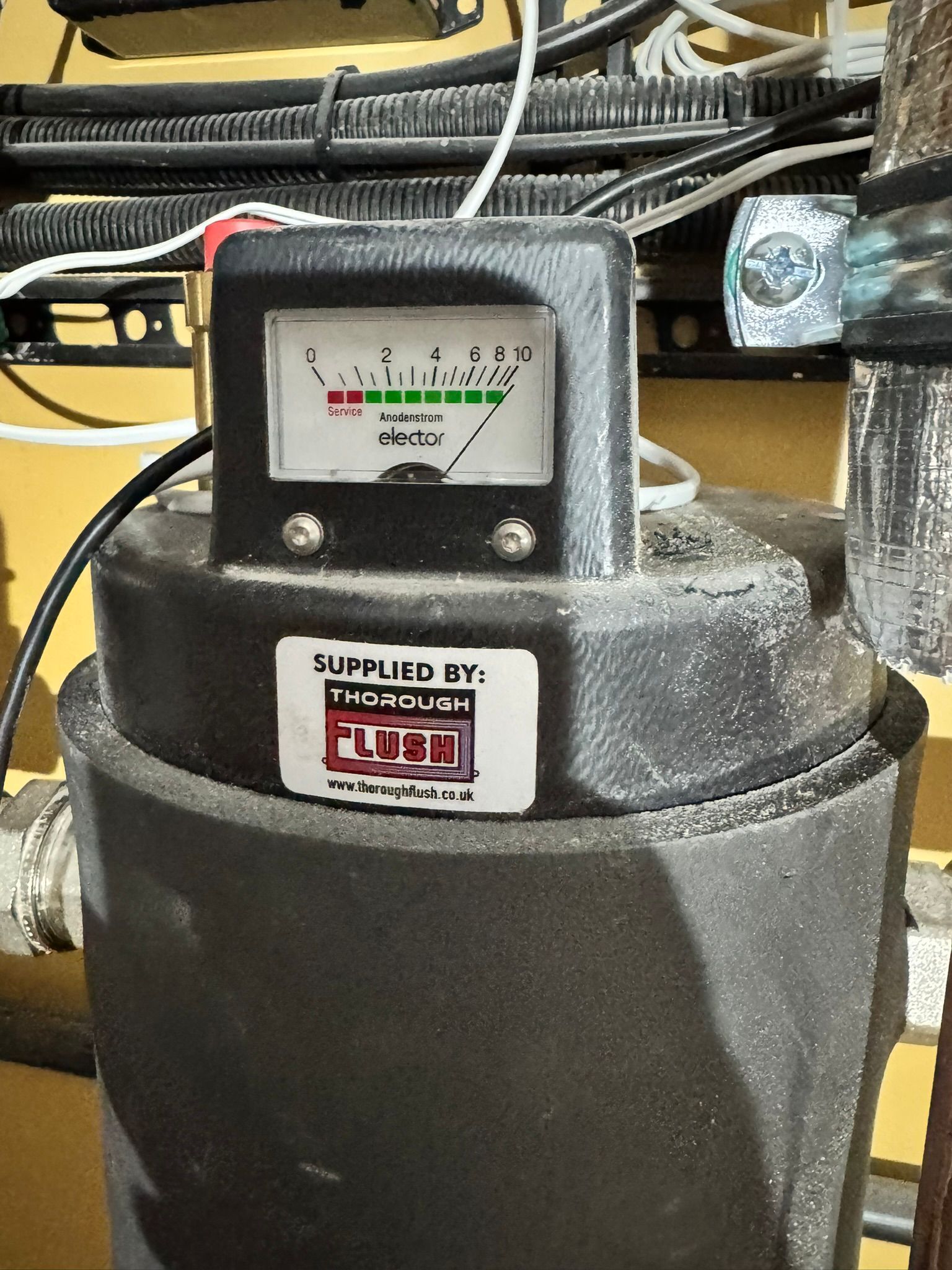
Damon is also a strong advocate for using Thoroughflush equipment to prepare and maintain system water quality. Thoroughflush produces demineralised water, removing ions and lowering electrical conductivity, which helps to reduce the rate of corrosion inside the system. More engineers are beginning to see problems with traditional chemical inhibitors, and the use of demineralised water is becoming an increasingly considered part of best practice for long term system health.
I have been thinking a lot lately about engineers like Damon, ordinary, down to earth family people, just like many others out there, but who are quietly doing extraordinary things for our industry. Damon is not a flashy influencer, he is someone whose everyday approach, humility and decency make other heating engineers stop and take notice, and the fact that he has inspired a growing number of his peers to learn more about heat pump systems says everything.
This spirit is exactly what BetaTeach is built on, people activating themselves as self directed learners, and people becoming learning resources for one another. Damon shows how powerful that can be. The small umbrella arrangement he runs, where a handful of engineers work under his MCS certification, is a great example of practical, thoughtful leadership. I remember when he first told me about his plan, and thinking yes, this is exactly the sort of approach the industry needs, it makes quality control simpler, and it gives engineers a trusted person to turn to when they hit specific challenges.
He also represents installers within the Heat Pump Association, taking real concerns from the field back to the people who can act on them.
I learn a lot from him, and I believe that if more of us followed his example we would see better installations, better learning, and a stronger community.
Thanks for reading, and here is to more people like Damon showing us what good engineering, good learning, and good community look like.
Have a great weekend everyone.
Nathan
Subscribe to get more newsletters like this, if you haven’t already.