Inverleith Gardens, Edinburgh: Overcoming Conservative MCS Defaults in a Traditional Stone Retrofit
A master heat engineer case study
Helping YOU find good heating engineers. We share case studies from engineers in the Guild of Master Heat Engineers to help people find top installers, help gas and oil engineers increase their knowledge around heat pumps, and provide a solution for third-sector professionals to understand the industry better.
Installio powers the The BetaTeach newsletter.
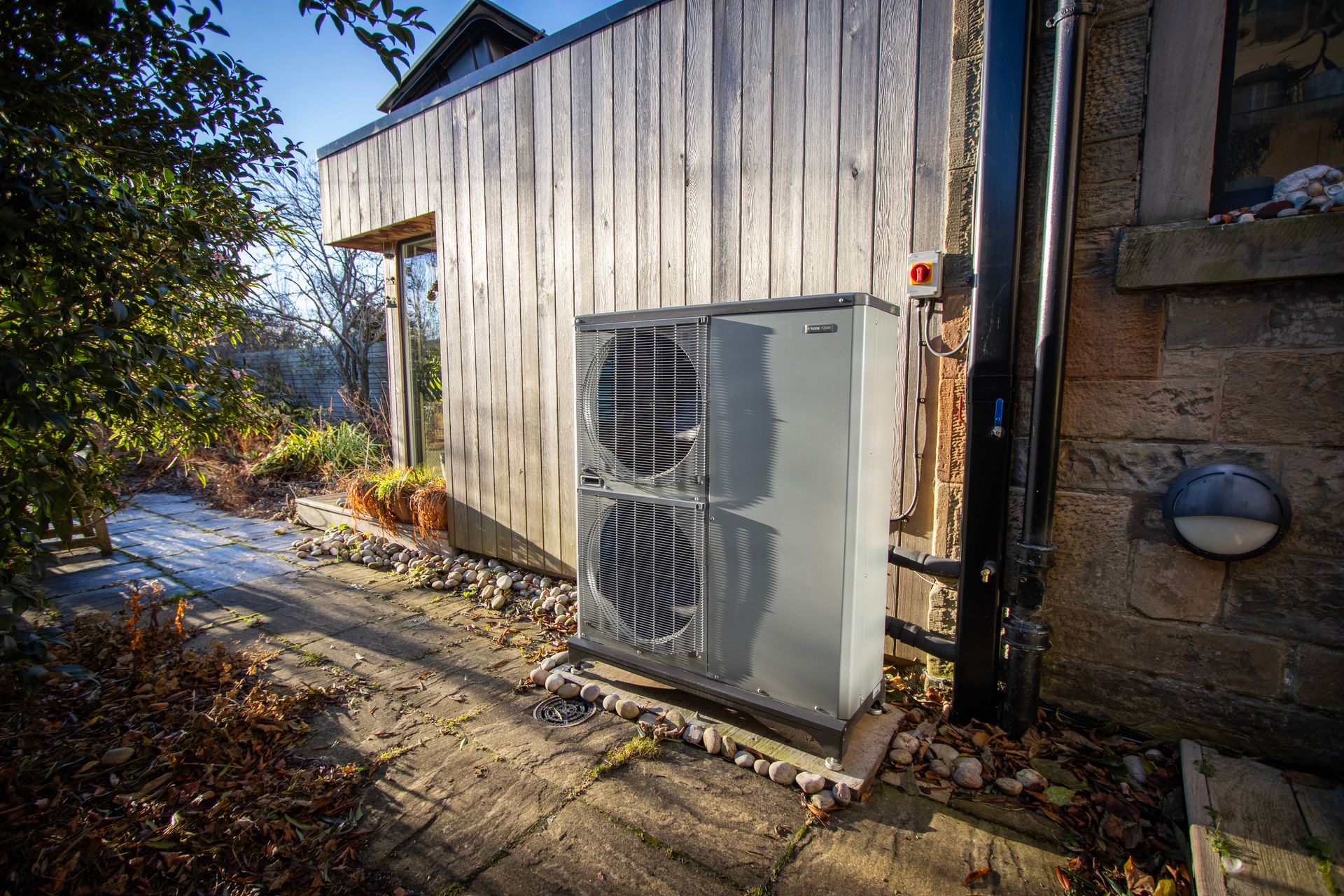
This installation by Barry Sharpe and the Renewable Heat team features the Nibe F2040 16kW air-to-water heat pump at the Edinburgh property. Positioned against the timber-clad extension, the unit is the heart of a system that successfully challenged theoretical models to deliver a peak heat loss of just 10 kW.
Overview
The design prioritises precision and efficiency, utilising specialist anti-vibration mounting and a clear aperture for optimal airflow. These engineering choices were critical for maintaining a high seasonal efficiency (sCOP 3.8) in a traditional pre-1919 stone environment. By applying empirical data from Historic Scotland and LocoHomes, the Guild of Master Heat Engineers bypassed the common "oversizing trap".Overview
This pre-1919 semi-detached home in Edinburgh serves as a benchmark for evidence-based engineering in the heritage retrofit sector. Spanning 180m², the property initially presented as a high-risk candidate for electrification. In 2023, the client initially disengaged after an MCS design and a Heat Transfer Coefficient (HTC) report suggested a heat loss between 12 kW and 18 kW. Such figures often necessitate three-phase power upgrades or complex twin-plant setups, which typically stall projects before they begin.
The installation was led by Barry Sharp and Richard Hailstones of Renewable Heat. With over 20 years of experience and a portfolio of 1,000 bespoke systems, the team utilised longitudinal expertise to deliver in a category of housing—solid stone, pre-WWI properties—that many installers quietly shy away from.

Architectural Context: The 180m² semi-detached sandstone property in Edinburgh. Traditional solid-stone builds of this era often suffer from conservative heat loss assumptions; however, empirical U-value adjustments and smart 'Holy Trinity' integration enabled a high-efficiency transition to a single air source heat pump without invasive structural changes.
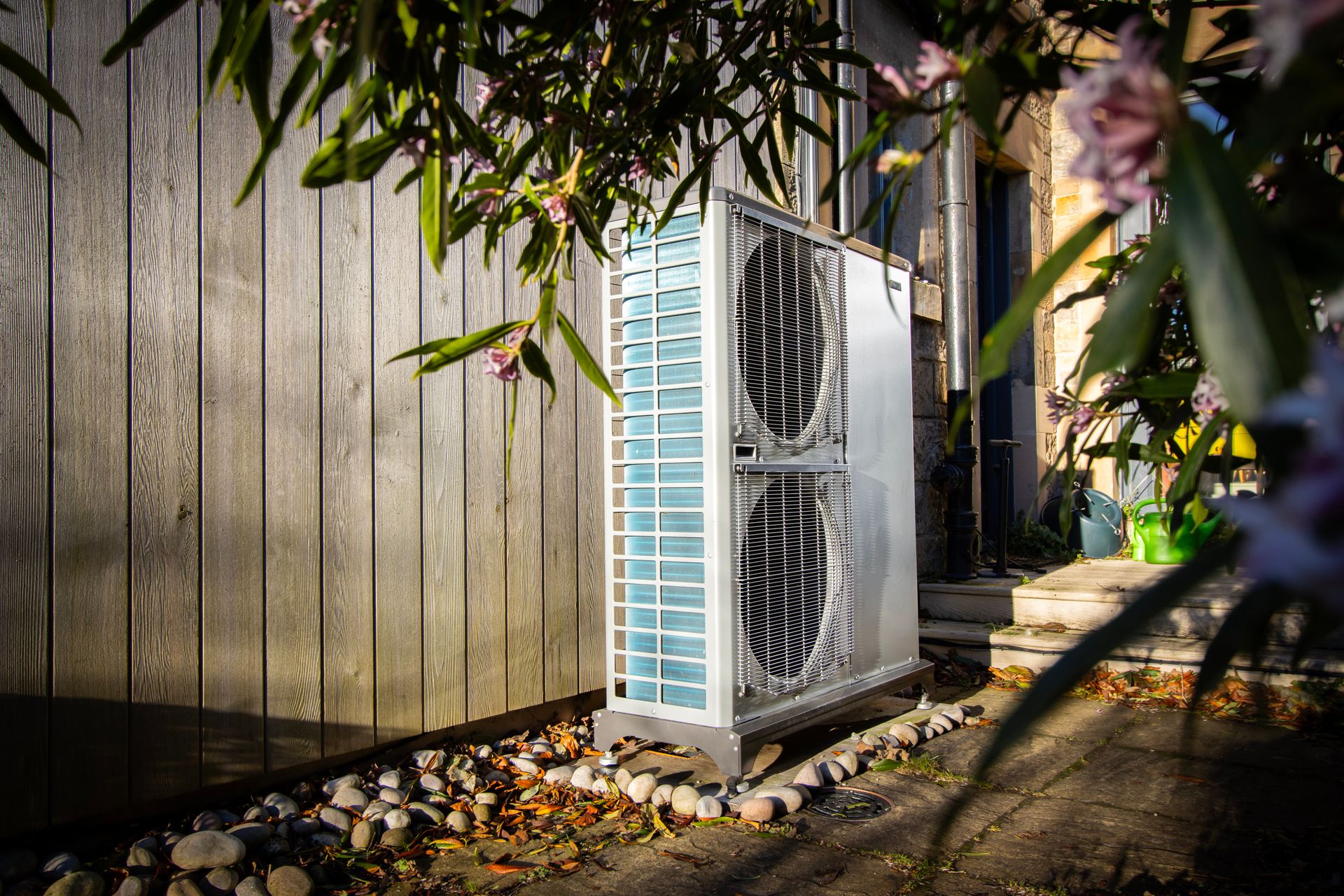
Precision Retrofit Engineering: The Nibe F2040 air-to-water heat pump (16kW) installed at the Edinburgh property. Note the specialist anti-vibration mounting and clear aperture for optimal airflow, critical for maintaining high seasonal efficiency (sCOP 3.8) in traditional stone environments.Master Heat Engineer
Master Heat Engineer
Barry Sharp at Renewable Heat Renewable Heat specialises in precision-engineered low-carbon home energy systems. Led by Barry Sharpe, the team integrates the "Holy Trinity"—heat pumps, solar PV, and battery storage—to maximise efficiency. With over 1,000 Scottish installations, they excel in complex heritage retrofits, delivering data-driven, cost-effective solutions for a sustainable future. |  |

Key Specifications
Heat Pump: Nibe F2040 16kW (R410A)
Property: Pre-1919 Semi-detached, 180m²
Design Heat Loss: 12 kW at -5°C DoT (Measured peak at 10 kW)
Hot Water Storage: 300 Litre OSO
Internal Design Temp : 21°C (Living) / 18°C (Bedrooms)
Heat Distribution: Existing Radiator Circuit
Monitoring: Open Energy Monitor (OEM)
The Challenge: Moving Beyond the Spreadsheet
The primary hurdle was a disparity between theoretical models and real-world building physics. The traditional sandstone structure was burdened by generic U-value assumptions and high theoretical air change rates. Furthermore, the internal layout—featuring multiple extensions, split levels, and finished flooring—restricted the scope for invasive radiator upgrades without major disruption. The project required a design that respected the building’s heritage while ensuring comfort for a client whose property had been deemed "difficult" by standard modelling.
Design and Installation Innovations
The engineering team challenged two critical variables: wall U-values and infiltration rates. Rather than the standard 1.86 W/m²K for sandstone, they applied a value of 1.0 W/m²K, supported by Historic Scotland’s empirical research on Glasgow and Edinburgh properties. Additionally, air change assumptions were adjusted from the default 1.5–2.0 down to a figure of 0.7 ACH, based on measured data from LocoHomes.coop regarding real, lived-in environments.
The system was originally designed for a 50°C flow temperature but was refined to operate at 45°C. To further lower the levelised cost of energy, the project integrated the "Holy Trinity" (as defined by Mick Walls): a heat pump, solar PV, and battery storage. Despite a modest 2 kW solar array, a 10 kW battery orchestrated via Home Assistant allows for aggressive load shifting on Octopus Agile tariffs.

The Storage Pillar: A wall-mounted GivenEnergy battery system integrated into the Edinburgh project. By pairing a 10kW battery with Octopus Agile tariffs and Home Assistant orchestration, the system shifts heat pump demand to off-peak periods. This integration reduced the average electricity cost from 25p/kWh to 14p/kWh, effectively lowering the delivered cost of heat to just 3.7p/kWh.Performance
Performance & Results
A full year of monitoring via Open Energy Monitor (OEM) validated the design. The data confirmed a peak heat loss of 10 kW, proving the system is correctly sized and avoids the efficiency losses associated with significant oversizing.
Seasonal COP: 3.8
Average Electricity Cost: 14p/kWh (down from 25p/kWh)
Delivered Cost of Heat: 3.7p/kWh
Savings: 38% reduction in heating costs; 44% reduction in total household power bills.
Estimated Heat Loss (kW) at Various Outside Temperatures
The estimated heat losses below for this property take into account the measured heat loss calculation of 12kW @ design outside temperature of -5°C
Temp | kJ/Sec | Temp | kJ/Sec |
|---|---|---|---|
-3°C | 11.1 | 6°C | 6.9 |
-1°C | 10.2 | 10°C | 5.1 |
0°C | 9.7 | 13°C | 3.7 |
3°C | 8.3 | 16°C | 2.3 |
Thanks to the Patrons
The Guild of Master Heat Engineers is supported by our Patrons.

Learn more about our Patrons here.
The BetaTalk Podcast
In this latest BetaTalk episode, Mick Wall, the data analyst who coined the term "The Holy Trinity," discusses how real world feedback is an excellent way to navigate the evolving energy market. This aligns perfectly with Barry’s experience in Edinburgh. After sizing the system using his professional heuristics, Barry and his customer didn't stop there; they interrogated the performance of different Octopus Energy tariffs. While the Agile tariff offers dynamic pricing, they learned through real world usage that the Cozy tariff was often more effective during peak winter demand. As Mick explains in the podcast, having the right "Trinity" of a heat pump, solar, and battery storage is only half the battle. The true reward comes from using that feedback to match your system's load shifting with the right smart tariff, ensuring the home remains a model of efficiency and low cost comfort. However, Mick also explains how we all should not be relying on tariffs and that a heat pump system should be designed and installed as optimanly as possible.

Master the "Holy Trinity" of home energy. Listen to Mick Wall discuss how to navigate Octopus Energy tariffs, challenge static heat loss models, and use real-world data to ensure your heat pump performs at its peak. This episode is essential listening for any engineer or homeowner looking to move beyond generic assumptions and into the world of evidence-based heating.
Closing Thoughts
This project reinforces the principle that good engineering is an act of interrogation. By applying empirical data from sources like LocoHomes and Historic Scotland over generic defaults, the team bypassed the "oversizing trap" that stalls heritage retrofits. It demonstrates that even in older, solid-stone homes, the combination of intelligent design and storage-backed load shifting can make heat pumps the most cost-effective heating solution available.
This interrogation of data extended beyond the building fabric to the energy markets themselves. Barry and the client tested two different Octopus Energy tariffs to find the ultimate economic balance. While Agile offers extreme lows, they discovered that the Cozy tariff performed better during peak winter demand, where the "Holy Trinity" of storage and heat pumps could be more predictably optimised. This iterative feedback loop allowed them to pivot based on real-world performance rather than staying tethered to a rigid, pre-conceived plan.
Barry’s ability to manage this complexity highlights his dual expertise as a master engineer and a seasoned business leader. Running a high-volume installation business for over 20 years has taught him that technical excellence is only half the battle; managing customer expectations through transparency and learning from historical mistakes is what defines his approach. This philosophy is the essence of the Guild of Master Heat Engineers. Whether an engineer has installed 1,000 systems or is just beginning their journey, the Guild fosters a "feedforward" culture. By sharing these lived experiences and data-driven insights, the community ensures that even newer installers can bypass years of trial and error, leveraging peer-to-peer learning to deliver world-class results from day one.
Have a great week everyone.
Nathan
Subscribe to get more newsletters like this, if you haven’t already.